Do Your Feet Feel Like Ants Are Crawling on Them?
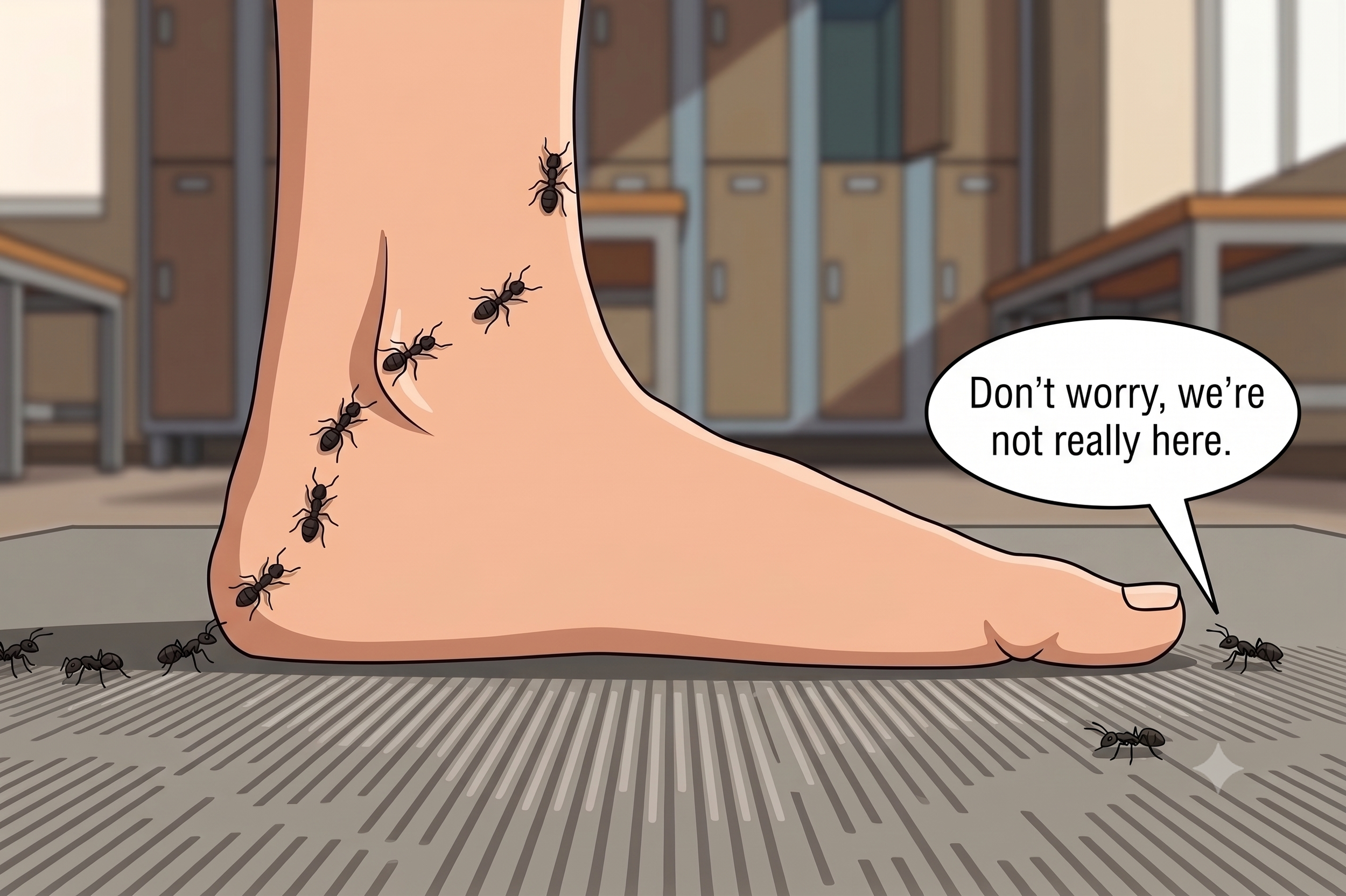
Understanding Diabetic Peripheral Neuropathy
"Ratna... this is going to sound really strange, but sometimes it feels like ants are crawling up my feet and ankles."
That was a question my cousin asked me over dinner recently.
She has diabetes and, like many people, attends her regular diabetic reviews. Naturally, she mentioned this sensation to the nurse.
The reply?
"That's just what happens."
She wasn't given the wrong answer.
But she just wasn't given the whole answer either.
I couldn't stop thinking about that conversation.
Not because my cousin asked a rare question, but because she asked one that I hear surprisingly often.
As a podiatrist, I hear all sorts of varied descriptions in clinic such as:
"It feels like my feet are buzzing."
"I'm walking on cotton wool."
"My socks feel bunched up... but they're not."
"My feet burn when I get into bed."
And yes...
"It feels like ants are crawling over my feet."
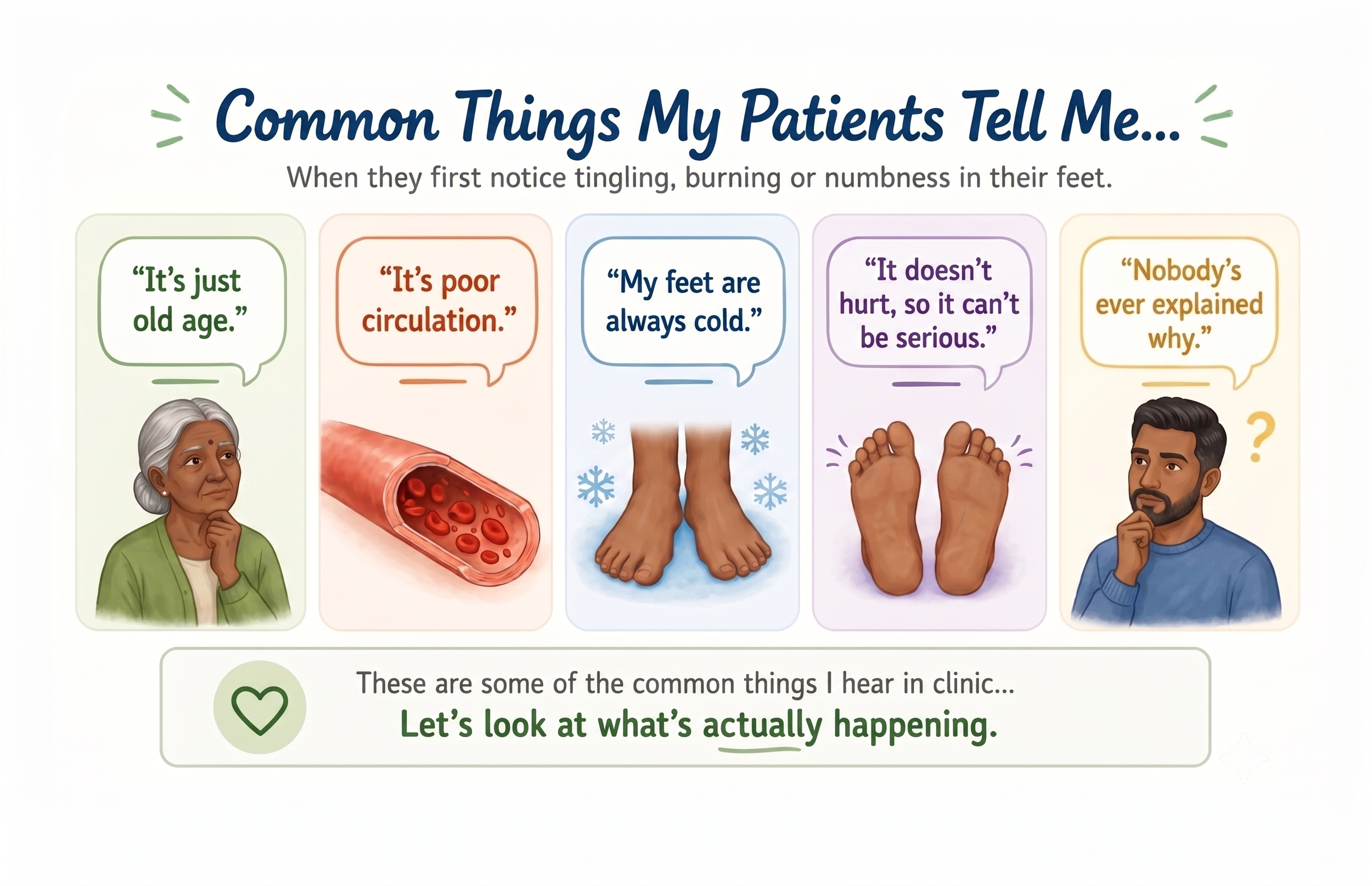
By this point in the conversation, most people have already come up with their own explanation...And it goes like this – see below picture:
If you leave this blog understanding your feet a little better than you did five minutes ago, then I've done my job.
It's to explain why it happens, what it feels like, and most importantly, what you can do to protect your feet.
So...what are these "ants"?
First of all...
There aren't actually any ants.
Sadly. 🐜
What you're feeling is usually your nerves sending confusing messages to your brain – also known as peripheral neuropathy.
Now, before you switch off because that sounds like something only doctors can pronounce, let's break it down.
Peripheral means the parts of your body furthest away from the centre - in this case, your feet and lower legs.
Neuro relates to nerves.
Pathy means something isn't working quite as it should.
Put it all together and diabetic peripheral neuropathy simply means damage to the nerves in your feet and legs caused by diabetes.
This blog is on diabetic peripheral neuropathy, but bear in mind -diabetes isn't the only cause of peripheral neuropathy.
Chemotherapy, vitamin B12 deficiency, thyroid disease, alcohol and several other medical conditions can also affect the nerves, but that's a blog for another day!
It sounds like a complicated diagnosis, but the idea behind it is actually quite simple.
Once you understand what's happening, it often becomes much less frightening.
Why does diabetes affect nerves in the first place?
The best way to explain this...
Think of the arteries, veins and nerves as travelling together like a three-lane motorway.
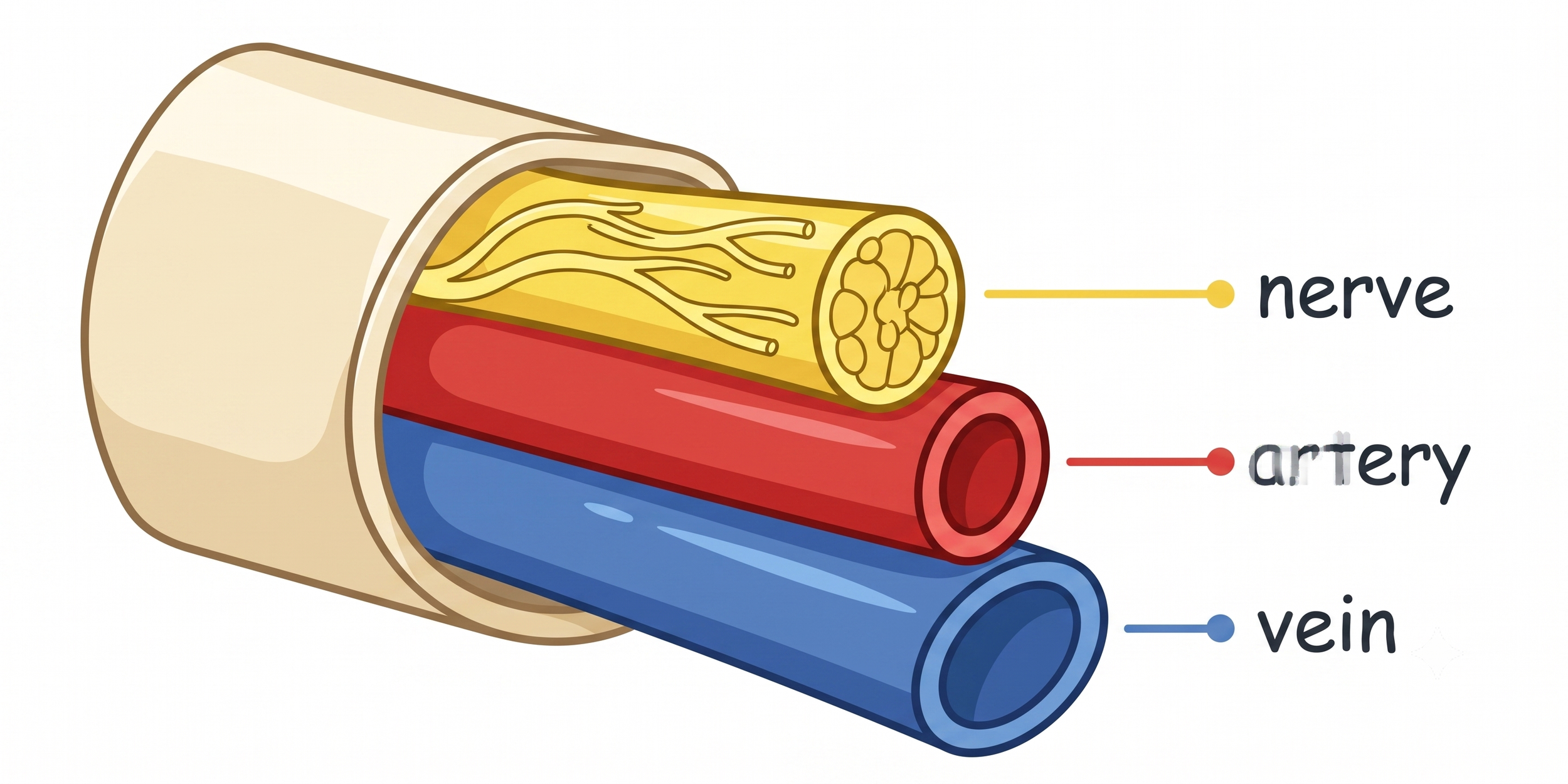
The arteries carry oxygen and nutrients down to your feet.
The veins carry blood back towards your heart.
The nerves are like electrical cables. They carry messages between your feet and your brain.
As they travel further away from your heart, they divide into smaller and smaller branches, rather like the branches of a tree.
By the time they reach your toes, these blood vessels and nerves are tiny.
Now imagine those tiny blood vessels being exposed to higher sugar levels day after day, year after year.
Over time, those small blood vessels can become damaged, which means the nerves don't receive the healthy blood supply they depend on.
These nerves (or electrical cables as I like call them) are healthy and messages travel clearly between your feet and your brain.
When it becomes damaged, those messages become scrambled.
Instead of sending accurate messages, the nerves begin to misfire.
That's why people can experience sensations that don't match what's actually happening.
You might feel: all the things mentioned in the picture above - ants crawling, buzzing, tingling…
Oddly enough, losing sensation worries me (as a podiatrist) more than feeling the tingling because that can be a sign of a bigger problem. I will explain this in greater detail below.
The trouble with nerves is they're rather dramatic.
When they're happy, you barely notice them.
When they're unhappy, they make absolutely sure you do.
One of the things I hear most often after I've explained what's happening is:
"Nobody has ever explained it like that before."
That's exactly why I wanted to write this blog.
Why does it often feel worse at night?
One of the commonest questions I get asked is:
"My feet hardly bother me during the day, but the minute I get into bed, the tingling starts."
You're not imagining it.
During the day, your brain is distracted by everything that's going on around you. At night, when everything is quiet, those abnormal nerve signals become much more noticeable. It's like hearing the ticking of a clock, you only notice it when everything else goes quiet.
Some people also find that even the light touch of the duvet can make the tingling or burning feel worse because damaged nerves become over-sensitive.
The important thing to remember is this: just because your symptoms feel worse at night doesn't mean your neuropathy is getting worse. Often, you're simply noticing it more.
Why do my feet feel freezing when everyone says they're warm?
One of the comments I hear almost every week is...
"Ratna, my feet are freezing!"
Then a husband, wife or family member touches them and says,
"They're lovely and warm."
The surprising thing is...
You're both right.
Your feet may actually be perfectly warm.
The damaged nerves are giving your brain the wrong message.
That's why they can feel freezing even when they're warm to touch.
You're not imagining it
That's one of the confusing things about diabetic peripheral neuropathy.
Different people experience neuropathy in different ways.
Some describe burning, others tingling, and many simply say their feet always feel cold.
Different symptoms! Same condition!
When does neuropathy become a problem?
People often assume that the tingling, burning or electric shock sensations are the biggest problem.
Surprisingly, they aren't. The reason being…
As a podiatrist, the patients who worry me most are often the ones who don't realise they have a problem.
That might surprise you. After all, surely it's better if your feet don't hurt?
Unfortunately, not always.
Pain is your body's alarm system. It tells you to stop and pay attention.
When you lose feeling in your feet, that alarm system becomes much quieter.
For Example: Imagine you've got a small stone inside your trainer.
Most people would stop after a few steps because it hurts.
But if you can't feel it, you may carry on walking all day without realising it's there.
By the time you take your shoe off, what started as a small problem may have become a much bigger one
And that's what worries me.
If you also have diabetes, even a small cut or blister can take longer to heal and, if left unnoticed, has the potential to become infected.
Five Simple Ways to Protect Your Feet
If you've read this far, you might be thinking,
"What can I actually do about it?"
The reassuring thing is that protecting your feet doesn't have to be complicated.
In fact, the small things you do every day often make the biggest difference.
· Check your feet every day
This is probably the single most important habit you can develop.
You don't need to spend an hour examining your feet every evening.
This isn't a military inspection! 😊
Just one or two minutes while you're getting changed, drying your feet after a shower or putting your pyjamas on is usually enough to notice if something has changed.
You're simply looking for anything that wasn't there yesterday:
A blister
A cut
Redness
Swelling
Broken skin
If you struggle to see the soles of your feet, use a mirror or ask someone you trust to have a quick look.
Finding a small problem today is much easier than treating a big problem next week.
· Keep your feet warm - safely
If your feet feel cold, it's absolutely fine to wear a warm pair of socks.
Some people also find compression socks helpful, but they're not suitable for everyone, particularly if you have problems with your circulation. If you're unsure, please ask before wearing them.
What I don't recommend is resting your feet against a fan heater, radiator or hot water bottle.
If you've lost some feeling in your feet, it's surprisingly easy to burn your skin without realising it.
· Keep moving
Even gentle exercise can help.
A short walk, some simple stretches or just moving your ankles while you're sitting can all encourage circulation and keep your joints moving.
Many people also find that keeping active helps take their mind off the tingling or burning sensations.
· Wear well-fitting footwear
Well-fitting shoes and slippers are one of the simplest ways to reduce rubbing, pressure and injury.
Always check inside your shoes before putting them on. You'd be surprised how often I find a small stone, a loose insole or even a child's toy that's been causing discomfort.
· Ask for help if you're unsure
You don't have to wait until something becomes painful.
If you've noticed new symptoms, have diabetes, or you're simply unsure whether what you're experiencing is normal, come and have your feet assessed.
Sometimes all you need is reassurance.
Sometimes we spot a problem before you've even noticed it.
And that's exactly why regular foot checks matter.