Why Gait Analysis Is My Fifth Love (And What It Reveals About Foot Pain)
My fifth love…
There’s definitely a pattern forming in my clinic.
Over the years, I seem to fall in love with things.
Not people… don’t worry. That would make life far too complicated! And one husband is just about all I can cope with!
But tools.
The kind that quietly become part of your day-to-day, and before you know it, you’re slightly lost without them.
My first love was my drill.
Simple. Effective. Reliable.
Still going strong, and still one of the most satisfying parts of what I do.
Then came my second… Cliniko.
Now that one was a different kind of love.
Less exciting on the surface—but life-changing in its own way. Organisation, structure, fewer headaches… what’s not to love?
My third was Low Level Laser Therapy.
A bit more high-tech, a bit more subtle—but when it works, it really works. Especially for those stubborn cases that just don’t seem to shift.
My fourth was my Brannock measuring device.
What a way to measure feet properly.
And so sturdy, like a beautifully engineered machine.
And now…
I think I may have found my fifth..
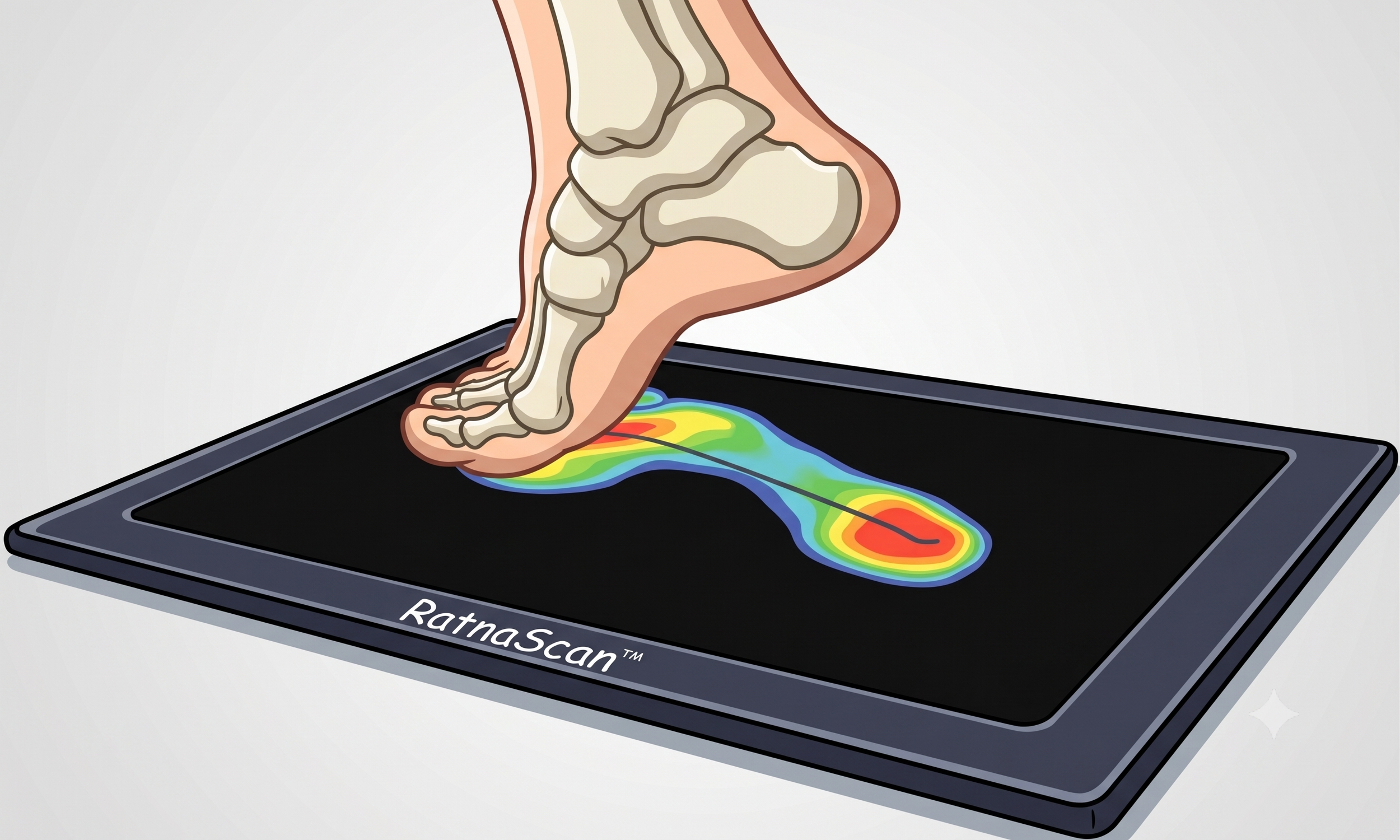
(It’s not really called RatnaScan, but it’s a great idea)
My latest addition
I’ve recently introduced a gait analysis pressure mat into clinic.
And yes… I am excited.
At this point, I probably shouldn’t be getting this excited about equipment—but here we are.
But once I started using it, I realised quite quickly—this wasn’t just another gadget.
It actually adds something unique into my practice.
What I’m seeing
For years, I’ve watched people walk. And I do this all the time, anywhere I am. It is like a force of habit! This habit is more obvious if you take me to a Railway station or an airport!
You develop an eye for it.
You start to pick up patterns, little compensations, things that don’t quite look right. I almost have a running commentary in my head as I see people walk.
Sometimes you just know.
This mat and its readings just gives me another way of seeing it.
A clearer one.
You walk across the mat, and suddenly there’s a visual map of how your foot is loading—where the pressure is, how it moves, what might be working harder than it should.
Sometimes it confirms what I was already thinking.
Other times… it makes me stop and rethink things.
Which, to be honest, is never a bad thing.
Why it matters
Foot pain is rarely just about the bit that hurts.
There’s usually something else going on behind the scenes.
A small imbalance.
A slight overload.
Something not quite doing its job properly.
This helps highlight those things a bit more clearly.
And what’s been really interesting is how patients respond to it.
When they can see it for themselves, something clicks.
It’s no longer just me explaining—it makes sense.
A recent patient…
I’ll give you a recent example, as this is where it really came into its own.
A patient came in who had been wearing insoles for a long time—probably 20–30 years. They had been prescribed by another podiatrist and she wanted them refurbished, but also wanted a review, as she hadn’t had one in a long time.
The main area of discomfort was under her right big toe—around the medial sesamoid. That was where she was most tender.
When I assessed her standing, she was quite convinced she had a pes cavus foot type.
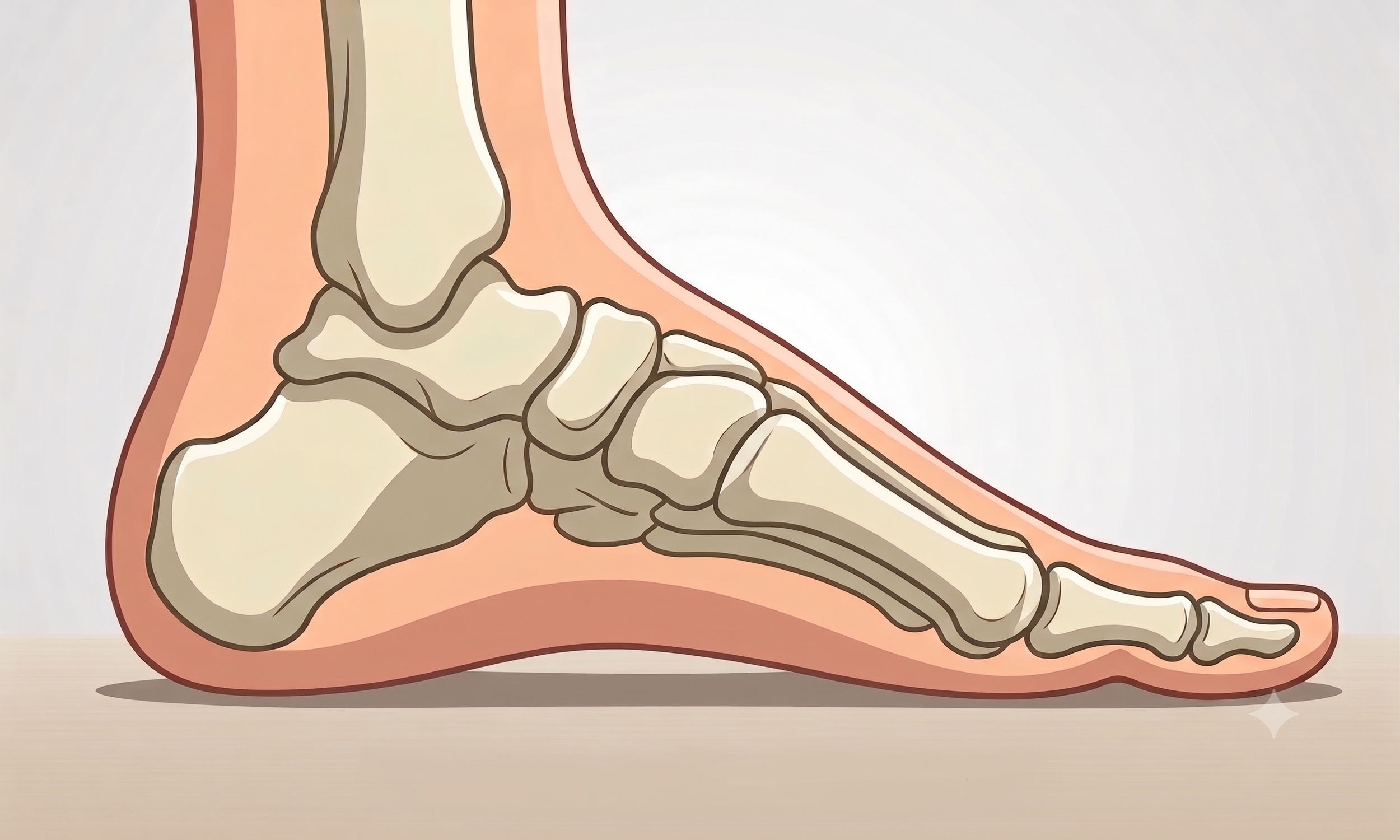
Pes Cavus foot type
And to be fair… standing still, it did look that way.
But when she started walking, things changed.
Her arch dropped.
The 1st metatarsal dropped down completely, not stopped as the ground stopped it going any further down, then big toe came down but not to the same level.
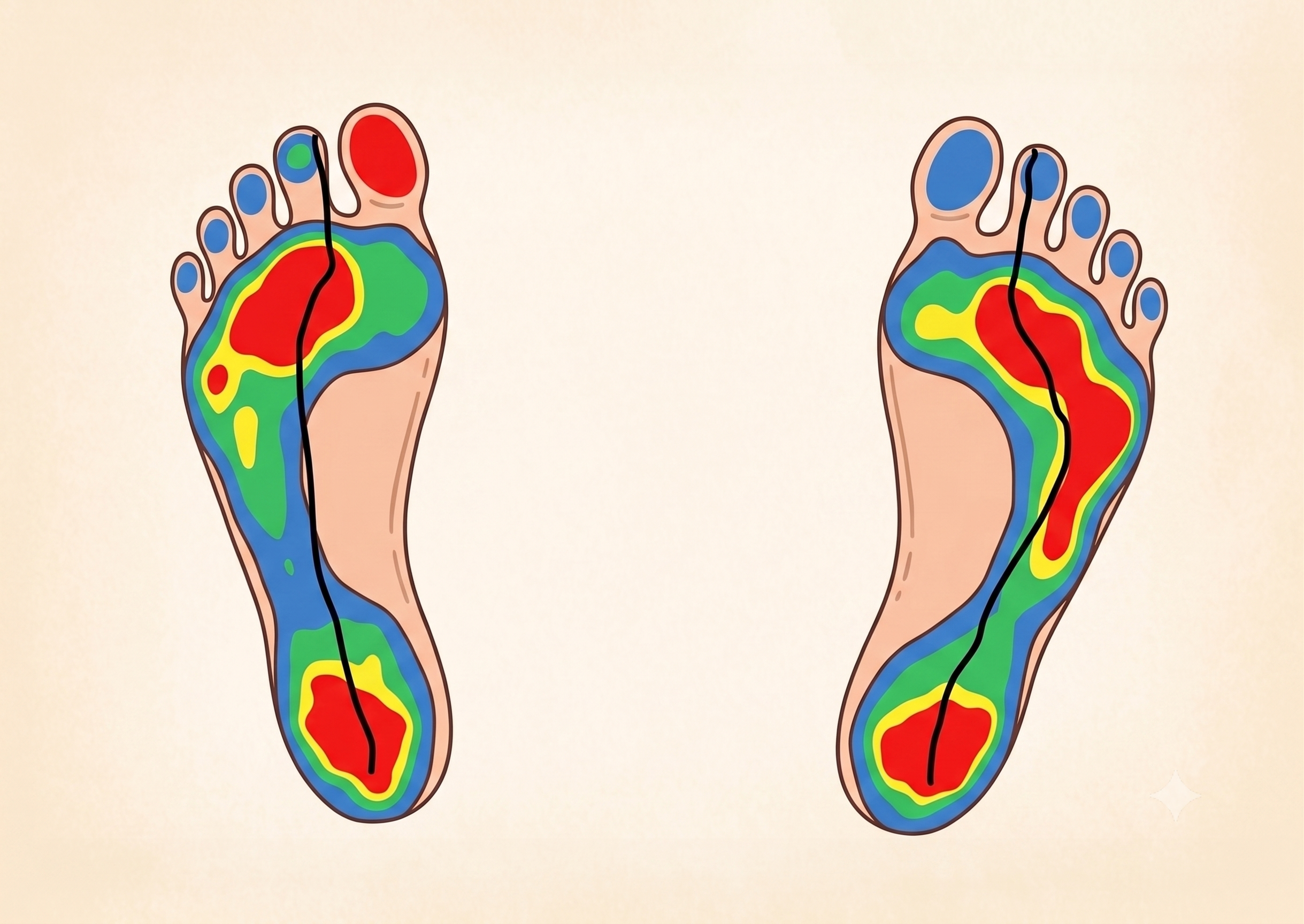
And suddenly, there was a lot more load going through that medial sesamoid.
I tried to explain what I was seeing at the time—watching her walk, talking it through—but she wasn’t entirely convinced.
Which is understandable. It’s not always easy to picture these things.
So we used the gait analysis.
And that’s when it clicked.
She could see, very clearly, how her foot was behaving when she was actually moving—not just when she was standing still.
What looked like apes cavusfoot type to the patient statically was, in reality, functioning much more like a pes planus foot during gait.
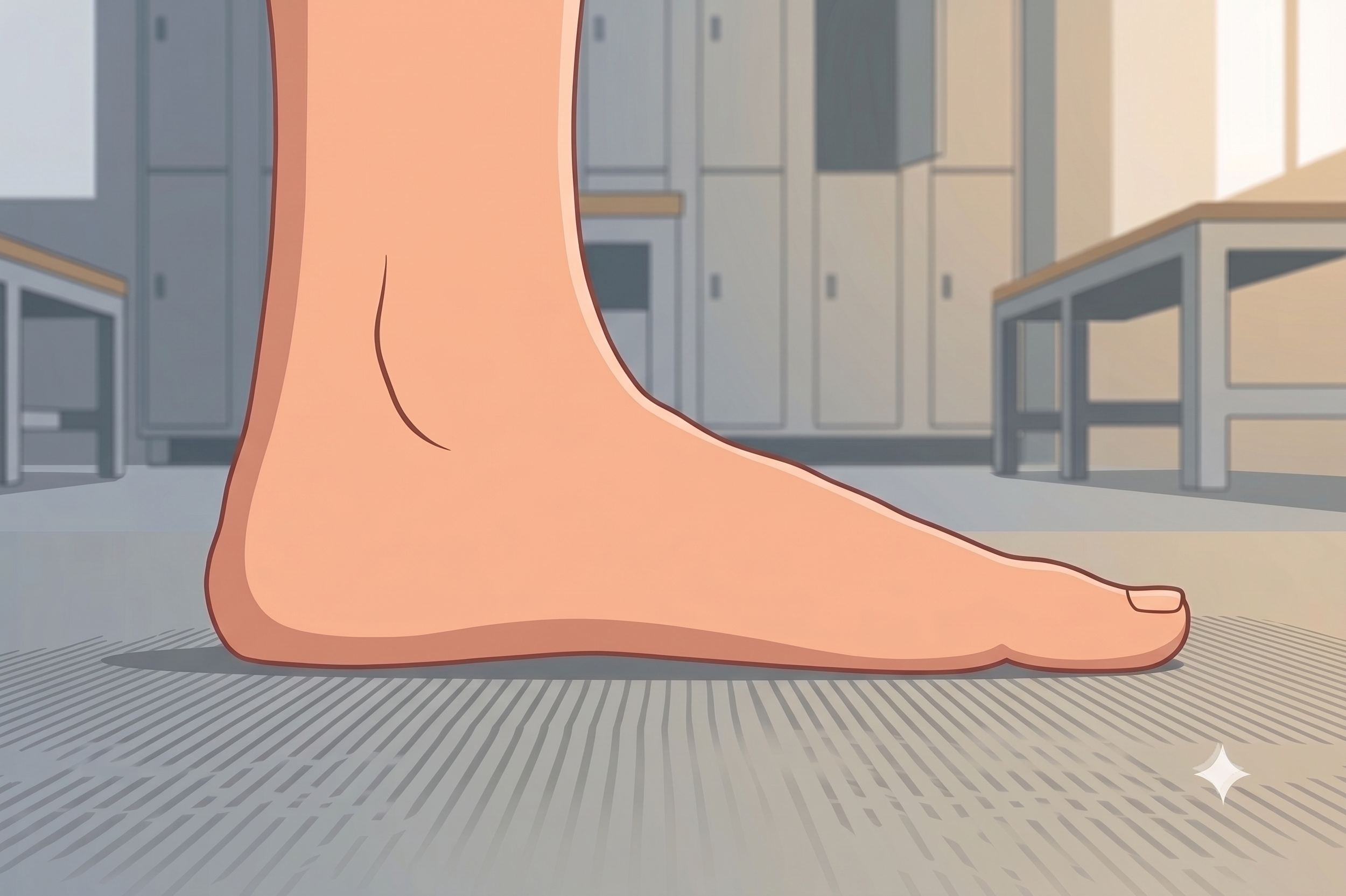
Pes Planus foot type
And with that came increased pressure through the medial sesamoid.
Which explained her pain.
No long explanation needed after that.
Sometimes seeing it is enough.
Is it essential?
No.
And I think that’s important to say.
Good clinical assessment will always come first.
But this adds another layer—especially when things aren’t improving as expected, or when the picture isn’t completely clear.
So… my fifth love?
It’s early days.
But it’s already starting to find its place.
The drill isn’t going anywhere.
Cliniko has firmly secured its position (thankfully).
Laser is still doing its thing.
The Brannock is beautiful.
But this…
This one might stay.