How to tell the difference between as verruca and a corn.
This blog actually came about after a conversation with my yoga teacher.
He contacted me about a painful area on his right fifth toe and wasn’t sure whether it was a corn or a verruca.
“I thought it was just a verruca…”
And very often, it’s actually a corn.
They can look very similar, but they are completely different conditions, and treating the wrong one can delay healing or make things worse.
After chatting through it, the cause became fairly obvious. He had recently bought a pair of trainers he’d been searching for years that were on display pair from a sports shop. The left shoe felt perfect, but the right felt slightly tighter. Hoping it would ease with wear, he bought them anyway.
Not long after, he developed a painful corn on his right fifth toe.
What struck me most was that he had never even heard of verrucae before and genuinely couldn’t tell the difference between the two conditions, which is something we see all the time in clinic.
And that’s exactly why this blog came about.
So what’s the difference between a verruca and a corn?
The key difference is the cause:
Verruca → caused by a virus (HPV)
Corn → caused by pressure or friction
Verrucae are infectious. Corns are not.
(Although if the pressure builds you can get a skin breakdown with a corn and that can become infected – this is more bacterial though)
Verruca vs Corn: Quick comparison
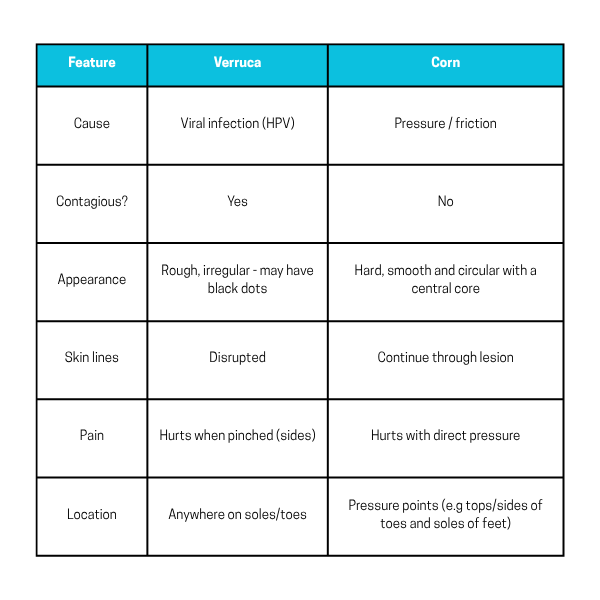
👉 A verruca often has tiny black dots (blood vessels), whereas a corn does not.
💡 Did you know?
Those tiny black dots you sometimes see in a verruca aren’t dirt.
They are actually small areas of trapped blood in the outer layer of skin (sometimes called intracorneal haemorrhages).
They form due to pressure and minor trauma, especially in weight-bearing areas, and are one of the key features that help distinguish a verruca from other types of hard skin.
The “squeeze test” (simple way to tell at home)
A quick guide I often explain in clinic:
Pain when pressing down? → more likely a corn
Pain when squeezing from the sides? → more likely a verruca
💡 Did you know?
There is no instant or “quick fix” for verrucae.
Even with treatment, they often take time to resolve because your body needs to recognise and fight the virus.
Treatments are designed to support this process — not remove the verruca overnight.
So why do people get it wrong?
It’s completely understandable. Firstly not everyone has a degree in podiatry and comes across these things often.
Secondly, they have features that at first glance are very similar.
Both can:
look like hard skin
appear on the same areas of the foot
become painful
But:
👉 A verruca is a viral infection under the skin
👉 A corn is simply thickened skin from pressure
Not all corns are the same. There are several different types, including hard corns, soft corns, neurovascular corns, and punctate palmoplantar keratoderma (PPK), often called "seed corns."Although they may look similar, they have different causes, symptoms and treatment options. If you'd like to learn more about the different types of corns and callus, please read our Corns and Callus blog.
This is why treating them the same way doesn't work.
A correct diagnosis matters.
Without it, things don’t change and it’s really frustrating.
Treating a verruca like a corn (or vice versa) can:
delay healing
irritate the surrounding skin
spread the verruca (if viral)
lead to unnecessary discomfort
This is something we see frequently, especially when over-the-counter treatments are used without a clear diagnosis.
So when should I get it checked?
If you’re unsure, it’s always worth getting a professional opinion, especially if:
it’s painful
it’s not improving
it’s changing in appearance
you’ve already tried treatment without success
A podiatrist can usually diagnose it quickly and accurately.
And one final thought from me…
If you remember one thing, make it this:
👉 Corns are caused by pressure. Verrucae are caused by a virus.
They may look similar, but they behave very differently.