Ratna’s ultimate guide to verrucas.
What they are, why they hurt and what works?
“I thought it was just hard skin…”
That is a common story.
I’ve been meaning to write about verrucae for a while, and a recent patient reminded me why.
A mum brought her son in earlier this year. He plays football most days, but he’d started getting pain on the side of his big toe. It was affecting how he kicked the ball.
At first glance, it looked like hard skin, perhaps even a corn.
It wasn’t.
It was a verruca.
We see this all the time in clinic. Verrucae are incredibly common, especially in children and active people, but they’re also widely misunderstood (and often misdiagnosed)
There’s no shortage of advice online or over-the-counter treatments. Yet many patients feel frustrated because:
👉 There is no quick fix for a verruca.
Some disappear on their own. Others persist for months and perhaps even years.
So, what is a verruca? (And how do you recognise one?)
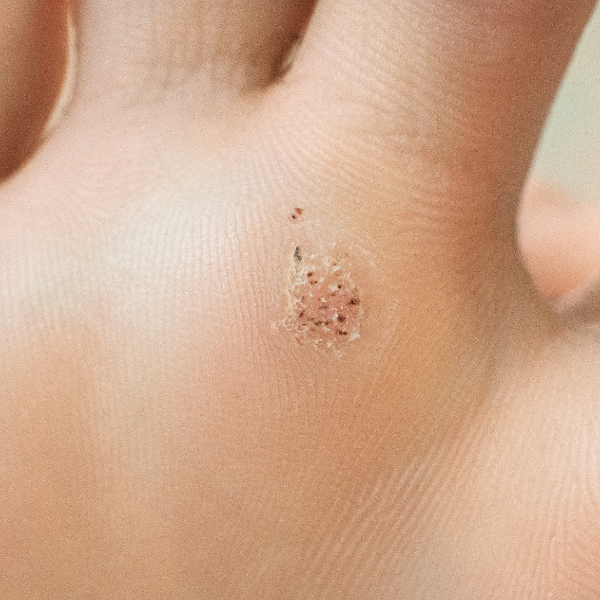
A verruca on the sole of the foot.
A verruca is a wart on the foot caused by the Human Papilloma Virus (HPV).
They usually appear on the sole or around the toes and may look like:
a rough patch of hard skin
a circular lesion
tiny black dots within the skin
pain when walking or squeezing
They’re often mistaken for corns, which can lead to the wrong treatment.
💡 Did you know?
Those tiny black dots you sometimes see in a verruca aren’t dirt.
They are actually small areas of trapped blood in the outer layer of skin (sometimes called intracorneal haemorrhages).
They form due to pressure and minor trauma, especially in weight-bearing areas, and are one of the key features that help distinguish a verruca from other types of hard skin.
How do you get a verruca?
The virus that causes verrucae is very common and exists in everyday environments.
You can pick it up through:
communal areas (swimming pools, changing rooms)
direct skin contact
contaminated surfaces
Warm, damp environments soften the skin. For example, in swimming pools or changing rooms, the skin becomes macerated (softened).
Non-slip flooring can create friction, leading to tiny micro-abrasions in the skin, small breaks you wouldn’t notice.
👉 These tiny breaks allow the virus to enter the outer skin layer.
Once inside, the virus infects living skin cells and makes copies of itself, spreading within the skin.
What is the incubation time?
Verrucae don’t appear straight away.
👉 The virus can lie dormant for months, even up to a year before you see any signs.
That’s why it’s often impossible to know where you caught it.
What’s happening under the skin?
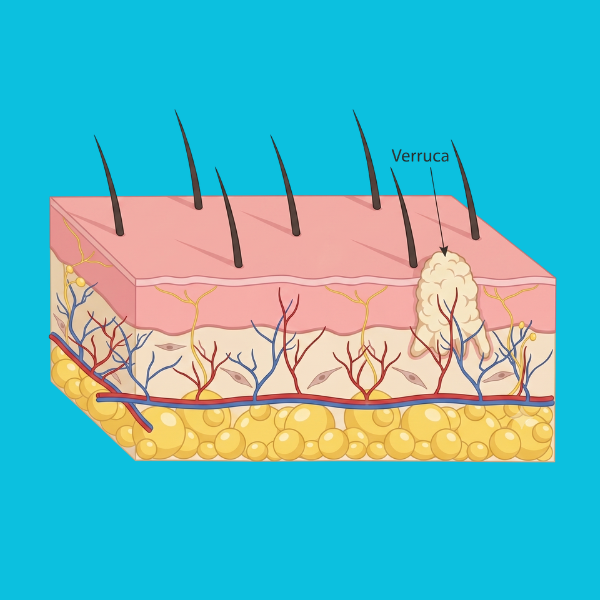
A verruca in the epidermis.
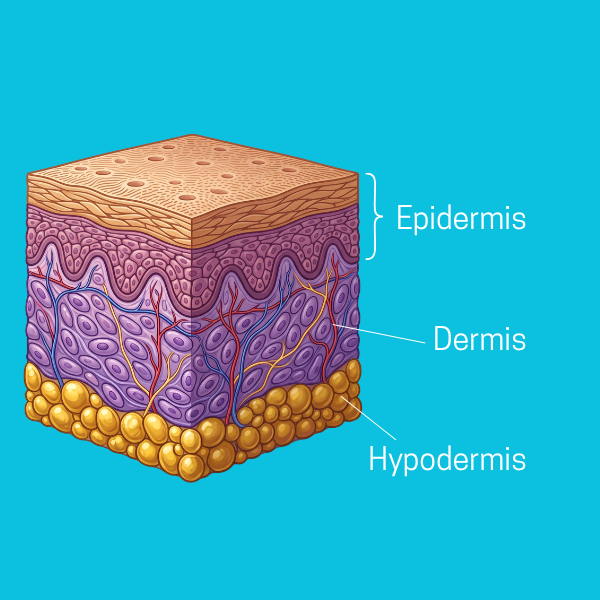
Skin layers
Verrucae live in the outer layer of the skin (epidermis).
This matters because:
the immune system is less active here
the virus can remain “hidden”
it continues to replicate within skin cells
This is why verrucae can persist and don’t disappear overnight.
So why won’t my verruca go away?
Verrucae are not just hard skin, they are a viral infection.
Which means the body often takes time to recognise and respond to the virus.
This is why:
some verrucae last months or years
some don’t respond to initial treatment
there is rarely a quick cure
Most treatments work by stimulating your immune system, not instantly removing the verruca.
Does the verruca virus completely go away?
This is a common question, and the honest answer is: we don’t fully know.
In many cases, the body clears the virus once the verruca resolves. However, some strains of HPV are known to remain dormant in the body and can potentially reactivate later.
This is similar to how viruses like cold sores behave, although this is less clearly understood with verrucae.
Research into HPV has mainly focused on higher-risk strains (such as those linked to cervical cancer), where we know that not everyone develops lasting immunity after infection.
With verrucae, there is less research available, so it’s difficult to say with certainty whether the virus is completely eliminated or simply becomes inactive.
Some adults with verrucae report having them as children, but whether this represents reactivation or a new infection isn’t clear.
Simple takeaway for patients
Most verrucae resolve and don’t cause further problems — but it is possible to develop them again in the future.
Can verrucae go away on their own?
Yes, and often they do.
Around 70% resolve naturally in children
Adults may take longer
If it’s not painful, monitoring is often the best approach.
So what actually helps?
There’s no one-size-fits-all treatment.
Treatment depends on:
location (e.g. painful big toe lesions)
size and type
age and lifestyle
previous treatments
The aim is not simply to remove the verruca, but to change the environment so the virus can no longer survive.
💡 Did you know?
There is no guaranteed quick cure for verrucae.
Most treatments don’t remove the verruca instantly, instead, they work by stimulating your body’s immune system to recognise and clear the virus.
This means treatment takes time, and consistency is key.
Common mistakes that make verrucae worse
treating it like hard skin or a corn
overusing over-the-counter acids
filing or picking (can spread the virus)
expecting a quick cure
When should you see a podiatrist?
It’s worth getting it checked if:
it’s painful (especially during sport or walking)
it’s not improving
you’re unsure what it is
the skin becomes irritated from treatment
A proper diagnosis avoids guesswork and helps you move forward with confidence.
Looking for verruca treatment in London
If you or your child has a painful or persistent verruca, we can assess it properly and guide you through the most appropriate options.
No guesswork. Just clear, honest advice.
A simple way to think about verrucae
One of the things I often say in clinic is this:
Verrucae usually go away on their own, the key is managing symptoms while your body catches up.
For children especially, it’s often more about comfort and confidence than anything else. If it’s not painful, they’ll usually ignore it.
Interestingly, it’s often the adults who are more concerned than the child.